Caregiver Anger

Anger is real. How you react is what matters the most. It is not always a person that makes you angry. It can be the disease itself. It can be insurance companies, Medicare, Medicaid or the medical community. You can be angry at the person you care for. You can be angry with friends and family that don’t help carry the load. You can be angry with yourself because you feel like a lousy caregiver.

Anger is normal and can be expected when facing circumstances that are out of your control. You may be as fearful as you are angry. It would be a good idea to write a list of who and what you are angry about. No one has to see this list, however, you may feel better expressing your angry and asking yourself if any of the people or things you are angry about can be changed.

If there is a way to safely address this list, in a calm manner talk with who you need to. If there is not a way to change circumstances, ask God to help you accept this. Ask yourself what triggered this episode of anger and what condition you were in when it happened.

Physical and mental fatigue are very likely culprits when you are easily angered. Getting enough sleep may mean napping when the one you take care of naps. I can remember being pregnant with my second child. I had an active one year old. When she took a nap, I napped with her so I could be patient and loving instead of grumpy and tired.

Eat healthy. Keep fruit and vegetables handy for you and the one you care for to grab when hungry. Use the crockpot or instant pot to prepare meals on busy days.

Go for a walk. Take time to enjoy nature.

Listen to your favorite music.

Pray.

Step away from a stressful situation and simply breathe a few slow breaths.

Address the fears you have. This may mean preparing for the what if moments before they happen. I knew my mother had Alzheimer’s and it was prgressive and eventually fatal. When my dad was unable to take care of her, I researched memory care assisted living facilities and put her name on the waiting list of those I liked. I did this in their city and in the city I lived in. This was because I knew that should dad pass away, I would have to move mom to me.

Financial and legal planning took place early on in my family. My brother and I were involved together with our parents. We never had to worry about them losing their home. We understood their medical directives. Deal with these items now, not later.

Learn to appreciate help when you can get it. Keeping a grateful attitude is better than simmering in resentment when help is not given.

If there is any pain in your past relationship with the one you care for, please find a way to forgive when you can no longer have a meaninful conversation with them. Forgiveness opens room in your heart for love, compassion and kindness. Forgive siblings or children who don’t step up to the plate and assist you. Focus on making the most of the time you have because you did step up to the plate.

Lastly, forgive yourself. This is the toughest job you will ever encounter. There is a learning curve and you will get better each day. When fear and anger try to overshadow the goodness, try to take the thoughts captive before they grow out of control. Trust God to give you peace.

Word for Today

Ephesians 4:26

“In your anger do not sin”: Do not let the sun go down while you are still angry,

Song for Today

Prayer for Today

God,

Thank you for giving me emotions. Sometimes I get frustrated and allow them to overwhelm me. Help me to stop and reflect on how my actions could hurt others. Help me to trust you to handle the people and circumstances that I cannot control. Guide me to take peaceful actions rather than lash out. Heal my heart from hurts and fears so that I can love the way I should.

Amen

Parkinson’s With Dementia

Parkinson’s dementia is closely related to Lewy Bodies dementia.

Studies have found LBD and Parkinson’s disease may be linked to the same underlying abnormalities in the brain processing of alpha-synuclein. LBD and Parkinson’s disease dementia are similar except for the order in which the symptoms develop.

The timing of when symptoms occur may determine which diagnosis a person receives. If thinking problems appear within a year of movement difficulties, doctors diagnose Lewy body dementia. If dementia develops a year or more after Parkinson’s disease symptoms begin, doctors diagnose Parkinson’s disease dementia.

Common symptoms of Parkinsons with dementia include:

Sofly spoken muffled speech

Misnaming objects

Trouble understanding complex sentences

Difficulty focusing

Memory loss

Confusion

Moodiness

Change in appetite

Delusions

Change in energy level

Sleep disturbances ( vivid dreams)

Vision issues like difficulty spotting objects in a cluttered space.

Trouble planning and staying on task

Language challenges

This list may be alarming at first. Remember that changes occur over time. Always remember that the person is not acting out; however, the disease is. Here are ideas to assist in caring for someone with these behaviors

  • establish and follow a routine when possible
  • being extra comforting and patient
  • limiting distractions and avoid crowds
  • try to maintain a consistent sleep schedule
  • declutter your living space
  • learn all you can about Parkinsons dementia
  • Join a support group

Keep a journal of behavior changes, dels]usions, nighttime disturbances, etc. This will help you when speaking with physicians. Log all medication changes as well.

I know a family dealing with this dementia and have watched them make adjustments. Their family members have had police show up in the night because he called and reported someone had broken into their home. Now, he has taken to roaming around partially clothed. Recently he heard my voice as someone was listening to me speak on a recording. He told them that sounded like someone I know. He then tried to remember my name but could only come up with my husband’s name. He referred to me as his person.

Be calm. Be patient. Allow them to try to communicate and try to interpret what they are trying to say. As far as the police calls, most law enforcement departments now have a data base that contains information you provide alerting them that a family member at your address has dementia. This can allow them to have a mental health officer available. For the other issue, just close your blinds.

Take a deep breath. You can do this. When things become difficult, step away for a few minutes and try a new approach. If you read through previous posts you will find other helpful information. Many of the behaviors and symptoms are similar with all forms of dementia.

Word for Today

Psalm 31:24

Be strong and take heart, all you who hope in the Lord.

Song for Today

Prayer for Today

Dear God,

Thank you for being faithful. There are days I feel like the battle will not end. On those days that I struggle to stand on hope, hold me as I wait on you to move on my behalf. You are the only thing I have that is always true. Help me to be able to say “It is well with my soul”.

Amen

Lewy Body Is Different

Alzheimer’s disease has many early signs such as memory issues. The mental cognition has a slow decline over time. Lewy Body is not so predictable. I experienced this first hand. My mother had Alzheimer’s disease. We thought that my mother-in-law had vascular dementia and no one tested for Lewy Body disease. As I educate myself about LBD, I tend to lean heavily to the thought that she had it.

Lewy Body Disease (LBD) is a progressive briain disorder. Alpha-synuclein is a protein found in the brain. When these clump together it is known as Lewy bodies. Cells normal function is interrupted resulting in cognitive decline, hallucinations, delusions, sleep disturbances and motor issues.

I saw signs of cognitive issues but they were vastly different than Alzheimer’s. Her memory was pretty much intact. She would appear perfectly normal one day and confused the next. Her essential tremors ramped up. Most of the families members did not see symptoms in the early stage.

She would insist that someone had told her they would take her shopping and be upset when they did not show up. She would attempt to bake a cake and leave the flour out. She developed paranoia. She loved football and watching her favorite team. She would cheer over a play and then cheer again over the replay or go to the kitchen and never return to finish watching the game.

Then when her spouse passed away things escalated quickly. A huge delusion caused us to have to move her to an assisted living facility. Once there she often called to give me detailed accounts of visitors who were never there. Her hallucinations were described in full living color. She would be very convincing in her stories.

We experienced capgas syndrome. This is a psychiatric disorder where she held a delusion that we had been replaced with imposters. We would go visit and she would tell us who we were supposed to be but we were not real. We were imposters who looked, acted and sounded like us. Try explaining that one! Some day the chef or nurse were imposters as well.

A bouquet of flowers brought her joy. One day a lion was in the flowers. The next day monkeys were in the flowers. When I went to visit, a dancing lady was in the flowers. Before we all got stressed out, I decided the flowers were wilting and needed to be disposed of. A nurse smiled as I deposited them into the trash. Apparently she had be informed of the busy bouquet.

Falls became more common.

She became less social.

The whole experience was very different than the one with my mom. I truly wish I had known more while my mother-in- law was alive. We did the best we could.

I highly recommend a book if you suspect your loved one may have LBD.

Living with Lewy’s by AmyJ Throop and Gerald S Throop. It opened my eyes to many things. Hopefully, you can get information that helps you. Don’t give up when seeking a physician that can give you a diagnosis other than mild cognitive decline.

Don’t give up. You are learning and improving as a caregiver each day.

Word for Today

Proverbs 2:6

For the Lord grants wisdom! From his mouth come knowledge and understanding.

Song for Today

Prayer for Today

Dear God,

I thank you that I can rest in you on the days that are hard. Give me wisdom as I help my loved one struggling with reality. Give me courage. Give me strength to trust you.

Amen

Amazing Caregivers

It is a joy to be able to interact with amazing caregivers. They can be young, old and in betweeen. Their time is given freely or they may be paid. The amount of pay is usually not why the job is accepted. It is accepted because they have beauitful caring hearts.

When I ask a man I know how things are going, he almost always responds with a smile. He loves his wife dearly. As the conversation lasts a little longer. He admits that today his wife knew him but on many days she doesn’t. Her lastest thing is to move and hide things so he is always searching for misplaced items.

This morning I spoke with a paid cargiver. She said that during the night the woman she takes care of awoke and cried out because her room was on fire. The caregiver looked around and realized the glowing face of a clock had set off the panic. She turned the clock and reassured her. The lady then asked her to please lay down by her side. With a smile she did just that and the other one fell fast asleep.

I am a part of an organization that has a board consisting of several people who are employed as nurses, social workers, and nursing home administrators. Often I overhear how they have bought food for a family, picked up prescriptions for someone, allowed a visit to turn into much more as they changed a person and helped bath them while there. This world is full of people that know how to love and show love to families that need them.

If you are reading this and feeling like a forgotten person who is overloaded, I get it. Too many times you must bear way more than a light load. You are amazing as well. This job is never easy. There are few rewards other than knowing you are doing your best under trying circumstances. Please know that God is with you. He can give you wisdom, courage and strength to continue to be amazing. He amazes us and enables us to amaze our loved with with compassion and tenderness on the most demanding days.

My applause goes to you amazing caregiver!

Word for Today

Galatians 6:4

Pay careful attention to your own work, for then you will get the satisfaction of a job well done, and you won’t need to compare yourself to anyone else.

Song for Today

Prayer for Today

Dear God,

Shape me and mold me into a better person. Give me compassion and shower my soul with love that you pour into me so I can pass it on to those you have placed in my care.

Amen

Make the Most of Your Time

Alzheimer’s disease erases many memories for the person living with the disease. Memories for family members will live on and be cherished. We have technology now to save voices, laughter, stories and visuals of our family and friends. If you have a family member in the early stages of dementia please use that technology. I left messages on my phone for years just to hear my parents voices.

Even if you do not have Alzheimer’s in your family now, you may someday. Listening to the spousal caregivers talk about what they miss the most is causing me to be more deliberate about making and saving memories that I and my husband can hang on to should one of us be left alone.

I changed phones and lost a video that I treasured. My mom was dancing and laughing with her youngest grandson. Prior to having Alzheimer’s she would never have acted this silly. We all sat watching in awe. We were in awe over the fact that she was truly happy and in the moment with him. I was pondering about how much longer we would be able to hear her laugh.

Years later I watched that same grandson see my dad wiggle his ears. Every grandchild, niece and nephew loved watching dad do this little trick. Dad had been so busy taking care of mom that he hadn’t thought to show this youngest grandchild his ear wiggling. My nephew sat trying his best to master this for himself while dad smiled. Dad passed away one week later.

Don’t put off taking small trips, watching sunsets, sharing hugs and expressing love to each other. Make the most of your time. Life moves at a fast pace and it is way to easy to get caught up in the busyness. My heart hurts when a senior citizen is the sole caregiver for their spouse. They look at me and tell me they cannot ask their children to help. They have their own lives and are busy.

Allow me to speak for these caregivers. Find the time to honor your parents. You are robbing yourself of something you can never get back. You can find time to meet a friend for coffee or attend a sporting event. You can find time for social media. You can find time to check on mom and dad.

“Family is not an important thing. It’s everything.” —Michael J. Fox

A huge excuse we often hear is “It’s Complicated”. When someone has Alzheimer’s their life and their caregiver’s life are complicated. Family can find a way to work through all of the complications and help each other survive. Asking God to make a way for you to do life together is a great first start.

Personally, there was a lot of travel and expense involoved during our time as caregivers. I gave up a job. God has abundantly blessed us along the way. It was an honor to be with my parents in their final days.

Caregivers, speak up. Give your children an opportunity to find ways they can help. Give them opportunities to make memories while they can.

Word for Today

1 John 3:18

Dear children, let us not love with words or speech but with actions and in truth.

Song for Today

This song refers to when we allow walls to form between us and God.

Prayer for Today

Dear God,

We need you to tear down walls and heal our hearts so that we can share life with those in our family. Show us how to build bridges instead of walls. Draw us closer to each other as we draw closer to you. Teach us to find balance in this life. Give us moments of genuine love as we show compassion and grace to those around us.

Amen

Alzheimer’s Language

I am far from being bilingual. This makes it difficult when I am around someone who’s native language is not the same as mine. Caregiving for someone with Alzheimer’ disease has forced me to face the stark reality that I had no choice but to learn to speak and understand a language that my parents now spoke. One parent lived in a new territory that I refer to as Alzheimer’s World. My other parent was residing in a territory I will call Mild Cognitive Decline World. To travel to their world, I sometimes felt like the one who was confused and lost. The most challenging part was having two parents living in different worlds at once. While neither was fun and exciting like Disney World, both provided excessive amount of adventure.

Once upon a time, I lived in “Normal World” with my parents. They were great parents and did their best to provide a nourishing and loving environment for my brother and I. They were active in their church, jobs, Lions club, Band Boosters and Atheletic Boosters. Steady and dependable are words that describe them the best. No family is perfect, but we grew up thinking ours was close. My brother and I were busy with our own families after becoming adults. Life was good.

Skip ahead several years and we began to see cracks in the armor of our parents. This happens as we become adults. This was different though. Slight personality changes were obvious in our mom. Dad was doing a wonderful job of hiding this from us in the beginning. Eventually, it could be hidden no longer. We were faced with seeing that “Happily Ever After” was not going to be the ending of their story.

Dad needed help navigating the progression of Mom’s Alzheimer’s. Stress was mounting as he floundered. He was giving a major effort to care for her. This once young athletic guy with no sisters even learned how to apply her makeup and assist with her hair. He cooked, cleaned and gave it his best.

That is when my quest to learn all I could about this disease began. I bought books, searched online and found a caregivers support group. In a sense immersing myself in this was a boot camp. Much was learned quickly. I want to share a brief amount of helpful information to help you learn Alzheimer’s language.

     Rules for the Caregiver

  1. Do not argue.
  2. Do not try to talk them out of anything.
  3. Do not try to make them remember.
  4. Enter their reality.
  5. Do not try to reason with them.
  6. Stay calm

The disease is in control and not the person you are caring for.  Try to separate the two.

  • Speak slowly and give them time to process short sentences
  • Rather than give an order, ask for a favor
  • Monitor your own emotional state
  • Redirect and distract with music and other activities such as snacks or taking a walk
  • Release your expectations of them to be who they were in the past.
  • Remember that their new reality is just as real to them as yours is to you

Facial expressions and your tone of voice speak volumes!

When dad began to have unexplained falls I suspected mini strokes. While he was mom’s primary care giver, he was beginning to show a loss of judgement. I would observe and make suggestions. Dad would get upset and walk away from conversations. I learned to let it go and wait. He would call me a couple of day’s later with a wonderful idea of how to handle a situation. I would listen as he told me the exact idea I had given him. I would then let him know that I thought it was a wonderful idea. This preserved his dignity and it worked. One day he ws mad and informed me that my brother and I were trying to control his life so were no longer his power of attorney. The next day he called wanting me to come and explain insurance papers to him. I told him I was no longer his power of attorney. He replied, “Oh, yes you are”.

Learning the best way to communicate with him was to allow him to think everything was his idea. You will learn to speak a language that they understand through trial and error. It can occur though if you are persistant.

You can do this! God will be your constant help when you feel anxious, sad or ill equipped.

Word for Today

Colossians 3:12

Therefore, as God’s chosen people, holy and dearly loved, clothe yourselves with compassion, kindness, humility, gentleness and patience.

Song for Today

Prayer for Today

God,

I praise you for the love and kindness you show to me. Give me the ability to share that kindness as I learn to communicate with others, especially those with dementia. Help me to listen more and speak to them in a way they understand. My greater desire is for you to continue to speak to their hearts and souls through their confusion.

Amen

Visual Changes and Driving

Before we tackle the issue of taking the car keys, we will explore why it is so critical to do it.

An abnormal build-up of proteins in the brain that kills cells and damages connections between neurons is a result of Alzheimer’s disease. Most people are aware of symptoms such as confusion, memory loss, personality changes and other kinds of cognitive decline. Some lesser known symptoms can include visual problems. Trouble areas are spatial relationships, narrowing periphial vision and depth perception. Some patients develop trouble reading, following moving objects, or have problems with contrast.

Driving requires having great vision. Imagine driving in traffic without having the ability to judge distance. Take away your peririphial vision. Stop at a red light with no depth perception. Now remove the abilty to read and process trafiic signs. I can see red lights and hear sirens in my head now especially having spent 22 years navigating traffic in a large city.

A fender bender would be a blessing. What if a child ran in front of the car and you did not see them coming. Could you live with the horror of hitting that child? No one wants that. The independence of an adult driver with dementia is never worth the life of a child. Take time to let this scenario to sink in. Now think about how fast this stress would escalate the person with dementia’s decline.

Getting lost is not the real problem. We can track phones and vehicles now. There may be hours of crying and praying but technology is available to help locate a lost loved one. Recently, I was traveling home from the city. Our farm is just ten miles from the state line. A car was moving at about 15 miles per hour in a 45 zone. Cars were changing lanes and zipping by. I slowed as I passed and glanced over. A white haired woman was looking around as if lost. I pulled over at a gas station. My plan was to get behind her and call 911 to come. Amazingly, she pulled over at the same station. I watched as she pulled out her phone. I slowly approached her car and tapped on the window. When she opened it she was already talking to her son. I asked if she was alright. She informed me that she was talking to Rick as if I knew Rick, I asked if Rick was her son. She said yes. I asked to talk to Rick. He informed me that his mother was supposed to be at a doctor appointment. I had him tell her to follow me and led her back to the appoinment.

She lived three counties away and was a few minutes from being in another state! God placed me in her path that day. When she never returned from the appointment, a family would be frantically trying to find her.

Hopefully, I have your full attention now. Take the keys for everyones safety.

There are things to consider now that you understand the visual changes. If a person tends to wander, this gives you knowledge. Place a black mat in front of exterior doors. Many perceive this as a hole and will avoid it. Add a lock at the top or bottom of the door. They tend to just focus on the handle. Paint the door the same color as the wall. It works as camoflauge.

If you go read the previous post on meals, the placement of food on plates may make more sense when you know that visual changes occur. To help navigation in your home declutter. Simplify decor to create a calmer enviornment for them.

Some visual skills may sharpen. They will read your facial expressions like a pro. Your stress will be reflected back because they can tell when you are angry or irritated with them.

They will see people and things you do not see. The woman in the mirror that she sees may not be her. She may think it is a stranger in the home. These things occur and it is their reality. Cover the mirror if it becames a huge issue. Agree that the non existing cat on the sofa is cute. My mother-in-law called to tell us a lion was in her flowers in her room. We thought maybe she saw the petals as a mane. The next day she called to tell us a fairy was dancing in the flowers. She was known to have delusions so we went to visit. Upon arriving she informed us a lady was in the flowers.

Promptly I commented that the flowers were drying out and needed to be tossed. We promised to bring new ones the next visit. I passed a nurse on the way to the trash can. She laughed when she saw me. She had been having to look for animals and people in that bouquet too.

If you just saw a monkey in the flowers, maybe you should get tested. Hey, I couldn’t resist. It is Saturday, and we all need a little humor.

Word for Today

Matthew 5:16

In the same way, let your light shine before others, that they may see your good deeds and glorify your Father in heaven.

Song for Today

Prayer for Today

Dear God,

I praise you for the many times I have seen you in my life. Your faithfulness remains the same as my life changes. Help me to trust more that you will be with me on the darkest nights and the brightest mornings. Help my loved one who struggles with dementia to always see you in the hearts and soul.

Amen

Why Are Meals So Hard?

Two of the first senses affected by Alzheimer’s seem to be vision and smell. Today we will explore how this impacts meal time.

My mom lost her sense of smell years before other symptoms appeared. This did not affect her eating habits for a long time.

Then a healthy diet flew out the window. Suddenly sweets were all she wanted to eat. This was so strange because the same thing happend with my grandmother. My aunts would take candy to my grandmother. My mom would find the sweets and hide them. Her sisters would find them and then hide them somewhere else. They would take them out of hiding for their mom when my mom was not around. They called my mom the sugar police. My mom was trying to give my grandmother a healthy diet. Her sisters wanted to let her have whatever she wanted since she was not diabetic.

Who was right? I think both were. A time comes when you continuously make adjustments finding what they will eat and strive to find a balance. Mom loved peanut butter pies. I jumped on making them in bulk and freezing them for later. This was a way I could reduce the sugar and add more peanut butter. The cream cheese and peanut butter were adding protein. You keep trying until you find what works. You can slyly be the sugar police.

Later in the end stage of the disease mom was limited to pureed food and thickened liquids. She would often close her eyes when we tried to feed her. I noticed that she barely stuck her tongue out to touch the spoon. If it tasted sweet, she would open her mouth. If it was not, she refused to open her mouth.

I had an aha moment and asked that yogurt or softened ice cream always be with her tray. Many mouthfuls of beef stew, green beans and other items were dipped into the yogurt or ice cream. Don’t laugh. It worked.

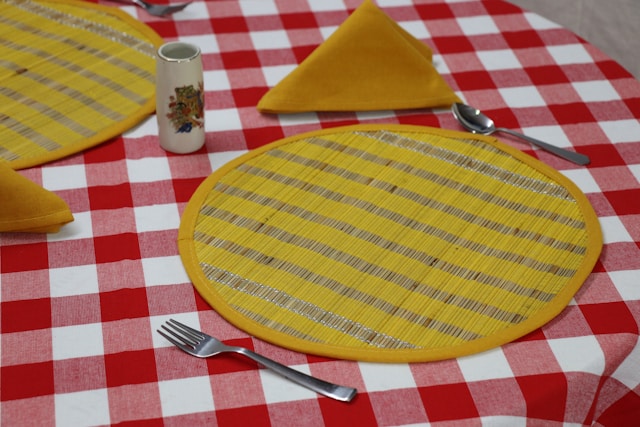
When vision changes and a table is too busy with patterns or color, they have trouble distinguishing what is their food and get confused.

The images above will help you understand a little better. Vanilla ice cream fades into the white dish. Mixed colors and patterns can bring frustration. Most of us love presentation and a beautifully set table. Those with dementia do not. Look at the floral plate carefully. The flowers look very similar to cookies. Imagine trying to pick the cookie up. This could set off a tirade. No one wants a food fight. Imagine blueberries in a blue bowl or green plate with turnip greens, broccolli and asparagus. It would all blend when they looked at it.

Keep in mind that they may not always recognize what is food and what is not. Once we were at a Christmas party in a skilled nursing facility. Last minute guests arrived and handed gifts out to each resident. The gifts were bottles of shower gel. I warned my husband to help me watch the residents because the staff had their hands full. My husband leapt to his feet just in time to grab a bottle before a woman turned it up to drink! The gift givers had no idea that a pretty bottle could mean something good to drink.

When it comes to food, keep things simple. On a white plate for breakfast you could have bacon, eggs and strawberries. Each could easily be seen. They may be calmer and eat more.

You can use essential oils such as citrus to stimulate their appetite. Play calm music softly in the background. Create a peaceful atmosphere and do not rush through the meal. Avoid large family gatherings when you notice that the stimulation is too much.

You will reach a point that using silverware is a challenge. Cut their meat before presenting their meal. If they have essential tremors or tremors from Parkinson’s Disease, you can find weighted silverware that helps stablize their hands.

When using silverware is not feasible, offer finger foods. Cut sandwiches into quarters. Other suggestions include fruit, vegetables and maybe a dip to make it more enjoyable. As I stated earlier, you will make adjustments as the disease progresses.

Just in case you are feeling the weight of how things will change, I have included a cool finger food idea. Yes, this is a child; however, if it gets healthy food down, go for it.

You will need to educate yourself about pureed food and thickened liquids in case you need to know about it later. People with Alzheimer’s can develop swallow issues in the last stages. I will try to expand on this in a later post.

Amazon has some weighted silverware. I have also found scarfs that snap in the front and act as bibs. These are beautiful and help preserve a little dignity. Amazon and etsy sell these but if you sew, they can easily be made. Print a card for dining out to hand your server explaining that your loved one has cognitive decline and you will order for them. This saves awkward and embarassing moments for all involved.

Since we are talking about meals, I have a kitchen tip. Place a placemat or piece of cardboard over your drawer that has knives. They will not look underneath by the time it is dangerous for them to safely use knives. If you find it necessary to unplug your stove, an electrician can install a switch out of their sight.

I smell my dinner now and it smells wonderful so I am wrapping this post up with a thankfulness for having an intact sense of smell.

Don’t get discouraged! You have got this under control. Together we an be the best caregivers ever.

Word for Today

Proverbs 16:24

Gracious words are a honeycomb, sweet to the soul and healing to the bones.

Song for Today

Prayer for Today

Dear God,

I get caught up in worrying and fretting while being a caregiver. Guide my steps and give me wisdom to face the task at hand. Help me to remember that gracious words are sweet to my soul and healing to my bones and the loved one I care for.

Help me to accept that changes will come and as I grieve during the process and I know you will catch my tears and hold me in the palm of your hand.

Amen

Humorous Moments Lighten the Load

Sometimes stress can get really heavy when you are a caregiver!

We can learn to see the humor in things. You never laugh at a person. You laugh with them or at a later time with friends or family who understand the difficulties you face.

When you are awakened in the middle of the night and asked “What are you doing?”. It doesn’t seem funny. Your fuzziness clears as your dad wants to know if you had decided to take a nap too. He is very cheerful and explains that he took a nap, showered and was headed to the dining room for dinner. I told him to go open his blinds and look outside. He replied,”oh my it is so dark”. I then told him his clock might say 3:30, but it is actually in the morning, not the afternoon. I then told him to go back to sleep for a bit. He informed me that he was wide awake.

I hung up the phone and called the nurse station at his assisted living facility and requested sometime pay dad a visit and encourage him to try to go back to sleep. I then complained to my husband and tried to go back to sleep myself. After a few more hours of sleep I could smile about the whole thing.

My dad had become urniary incontinent. He had always been a sharp dresser and cared about how he looked. I struggled with how to handle this situation while allowing him to keep his dignity. One Sunday he went to the bathroom and returned to the service. He was wet and he smelled. I tried my best to get him to the car, but dad was very talkative and an extreme people person. I know that smelled him.

My husband asked to handle the situation. He took my dad aside and commented that dad had always looked nice. He mentioned that perhaps dad didn’t make it to the restroom fast enough sometimes. He suggested that if dad would wear depends he might be able to hide this from everyone. People would not know and dad might not smell of urine. Dad agreed. They bought depends.

The next week I got a call that surprised me. All of my apprehesion about talking to dad was for naught. Dad had walked into my aunt’s home and proudly announced that he was wearing depends and they were wonderful. A sigh of relief crossed my face. After hanging up the phone I had a good laugh.

The next story actually involves a phone call. I got a call. The id let me know it was from my dad’s phone. He immediately let me know that his phone was not working. I asked him whose phone he called me from. He told me it was his phone. I asked what the problem was only to be told “I told you my phone is not working”. I realized this conversation reminded me of the following:

Costello: What’s the guy’s name on first base?
Abbott: No. What is on second.
Costello: I’m not asking you who’s on second.
Abbott: Who’s on first.
Costello: I don’t know.
Abbott: He’s on third, we’re not talking about him.

I laughed to myself and assured dad that I would come over right after lunch to check his phone. He was happy and so was I.

How do you not act surprised when a woman would get mad at her husband and throw a glasse of water at him? A friend discovered her dad had used her yeti cup to relieve himself while waiting for her in the car. What do you do when you find your clothes folded and placed in the kitchen pantry? You laugh or you cry. Choosing laughter is better.

Sometimes you cause others to laugh as they watch you deal with behaviors. Sometimes you laugh watching them deal with behaviors. I remember sitting in a hospital room with someone who ate an entire bowl of chocolate ice cream with the nurse handing them pills to swallow between bites. Satisfied that the medication was administered, the nurse turned her back. I watched as the woman promptly spit all six tablets out. After realizing she had mastered the art of cheeking pills, I then wondered how many times she had done this. My humorous thoughts about her talent dissapated as the horror of how much missing her medications had excellerated her behavior problems, falls and mental decline.

Remember it is okay to laugh as long as the person you are caring for is laughing with you. When my no nonsense mom peeked until the table giggling and waving at me I had to laugh. Her frostie had been dropped and I had climbed under the table in front of everyone to recover it. Just as I started to climb out quietly, she began to act like one of my young grandchildren. So much for sneaking out quietly and hoping no one had seen me. Hopefully, some one dealing with a parent with dementia learned humor is a great coping skill that day.

When you are out in public and your parent’s pants fall to their ankles, simply smile and pull them up. When someone with dementia reachs over and takes your ice cream, let them have it. Laugh at the calories you just skipped.

Humor is in fact a tremendously helpful coping skill. If you find something funny, don’t feel guilty.

I mean no offense to anyone but maybe God laughed as he created a platypus, an ostrich or a giraffe. As our creator, he has given us creativity. Use it to make life easier when you can.

Word for Today

Proverbs 17:22

A cheerful heart is good medicine, but a crushed spirit dries up the bones.

Song for Today

Prayer for Today

Dear God,

Thank you for giving me creative ideas as I navigate caregiving. Help me to choose to laugh and enjoy life when I can. Guide me as to when laughter is appropriate and when I need to be sensitive.

Amen

When the Dam Breaks

Today you will learn a bit more about me and my caregiving journey. The photo above is of a dam near my home. There is a history about it that I am sharing to help you better understand my own story.

According to my research over 50 men died during the construction of the dam. A local business has photos taken during the construction and stories I heard from family were that a few of the men fell and were buried in concrete.

The Wilson Dam was constructed in between 1918 and 1924. The shoals on the Tennessee river were difficult to navigate; hence,the dam was an attempt to tame the river. Today it produces power for the Tennessee valley. Families travel over the dam, power their homes and enjoy water activites without knowing the price some men paid.

I realized one day that I too had built a dam to try to control the turbulent emotions that being a caregiver had produced in me. To be strong, I buried pain and grief so that I could be an effective and loving caregiver. My mom had Alzheimer’s. It hurt me to the core watching her fade away. I was hurting so badly that I didn’t even realize that my dad was losing some cognitive ground as well. There was not enough time to process the changes. I shoved the fear, anxiety and heartache aside on the days that I didn’t take time to lay it at God’s feet.

When my mom died, I was not overcome with debilating grief. Dad needed me and I thought that the gradual grief that occurred as I lost bits and pieces of my mom must have left few tears to shed. Then my dad passed and I felt grief, but it still seemed like a wave of extreme grief would hit but it didn’t immediately.

Time passed and tsunami waves did begin to wash over me. Life isn’t always easy, so I shook the water off until other situations in life rattled me. I thought I was doing better and that I had given things to God.

One day out of the blue, a trigger hit. The patches I had applied to the dam could only last so long. When the dam broke, I broke. All of the stuffed emotions rolled over me. As I gasped for air, God used my husband to hold me and just let me cry.

Have any of you been building a dam to hold back your river of emotions? Many of you are dealing with unforgiveness over things in your past. Some of you have regrets that you didn’t choose to lay some things aside and make visiting your loved one a priority. Perhaps you live in fear of getting a terminal illness yourself. Do words run through your head that you wished you had said?

If your loved one is still alive, go and take care of things hidden in your dam. If you feel the stress and see fractures in your dam, find a place to hide and let emotions go. God is a great listener. A friend of mine felt like a pressure cooker and felt she had no place to let off stem. She visited the ocean and slipped out for an early morning walk on the beach. With no one in sight, she faced the ocean and yelled. The ocean sounds covered her voice, but she walked in peace.

Burying your emotions is only a very temporary solution. I understand that you have to be strong until a crisis is over. I encourage you to monitor your emotions. You will reach a point of needing to let steam off. Find a friend you trust and talk it out. Do not be guilty of allowing your spiritual, physical and mental health to suffer. I ignored a health issue for way too long, almost too long. Unusual circumstances happened in the year that my mom passed away. I had to slow down long enough to address a health issue. A surgery and biopsy revealed cancer cells that were caught just in time.

Grief can ease as we replace it with thankfulness for having a person in our lives that we were so blessed to have known. God has healed my heart in a way that no person could. I still miss my parents intensely.

Word for Today

 The Lord thy God in the midst of thee is mighty; he will save, he will rejoice over thee with joy; he will rest in his love, he will joy over thee with singing. Zephaniah 17:3

Song for Today

Prayer for Today

Dear Heavenly Father,

I praise you that you are a refuge I can run to when I feel the weight of the world on my shoulders. You are faithful to bear the load I carry. There are days when I understand the outpouring of psalms that David wrote. They are often extreme words of thanksgiving or sobs of a broken heart. You hear my words that flow from me.

Heal and restore me so that I can continue on. Touch my tired body. Renew my confused mind. Give me hope as I face trials. When I am guilty of hiding my emotions, you are searching my heart and waiting for me to simply pour it out to you.

Thank you for loving me.

Amen